Tuesday, October 15, 2013

Implementing Technology in Education

At Evergreen Montessori House, we utilize technology to enhance the academic experience for our students. By integrating tablets and computer software, our students have a variety of opportunities to engage their minds. For example, for our kindergartners, we found that the tablet is a great resource for them to enhance the reading comprehension and also provide phonics exercises. For our preschoolers, computer programs provide a great avenue for our younger students to review shapes, letters and numbers.

According to Kneas and Perry (2013), children interact with computers, thus allowing them to engage their minds; they determine how and when they will complete the game. Conversely, television programs are typically passive and do not allow children to “control” the ending. Still, there are great educational programs available for children, but educators, parents and guardians must ensure that television does not allow for laziness. In our previous blog post about using the Montessori Method to communicate with children, we stressed the importance of engaging children while they are watching programs.

Of course, we recommend only exposing a child to technology for a limited amount of time. In addition, not every child will enjoy using technology; you should never push a child to use a device or toy if she or he does not have any interest. Finding a balance will be difficult, but when we allow children to explore new avenues for education, we create opportunities for them to engage their minds and the world around them in exciting ways. 

Resources


Kneas, Kimberly M., and Bruce D. Perry. "Using Technology in the Early Childhood Classroom." Using Technology in the Early Childhood Classroom. Scholastic, n.d. Web. 19 Oct. 2013. <http://teacher.scholastic.com/professional/bruceperry/using_technology.htm>.

Tuesday, September 24, 2013

Implementing the Montessori Method

Learn how to implement Montessori at Home

It is very easy to implement the Montessori Method at home. All of Dr. Montessori’s work was based solely on observations of the child in his or her environment. Dr. Montessori viewed the child as the future adult and, like adults, the child’s personality, thoughts and movements all depended on the early environment – or the home environment. The early environment should reflect the individual needs of a child.

It is important to realize that Montessori was the name of a person. Dr. Maria Montessori was a physician from Italy who observed children in her care. Dr. Montessori developed a teaching method based on her observations. This teaching method is what we refer to as “Montessori”; and it is important to remember that this is a teaching method, not a philosophy.

In a Montessori classroom, the teacher is not the center of attention, but, rather, an observer. The Montessori teacher is referred to as the “adult” and only directs classroom activities when the children need assistance. Children in a Montessori classroom are encouraged to work in groups or individually. When in groups, children are encouraged to work collectively, by working together to resolve issues. If there is a difference of opinion or a conflict between children, they are encouraged to resolve their issues on their own. If the adult is required to intervene, he or she helps the children work through the problem by stating the facts and never taking sides. The autonomy of the child in a Montessori classroom teaches the child independence and increases self confidence.

As a parent, you too can increase your child’s independence and self esteem at home by following these easy steps:

  1. Be patient with your child and meet your child where he or she is developmentally;
  2. Be honest with your child and communicate to your child what you value in him or her;
  3. Observe your child carefully and ascertain where they are developmentally;
  4. Own up to your mistakes and apologize to your child when you are wrong;
  5. Model and teach your child grace and courtesy;
  6. Allow your child to speak for themselves rather than speaking for him or her to develop communication skills and confidence;
  7. Refrain from material rewards and excess praise;
  8. Establish a routine in which children wake up, eat and go to bed at the same time every day;
  9. Teach your child responsibility by getting them a small pet, such as a fish or a turtle, and show your child how to care for the pet;
  10. Dress your child to facilitate the freedom of movement, decrease distractions and develop independence; 
  11. Increase self esteem and confidence by making everything easily accessible – place your child’s toys on low shelves they take toys from and put back, place a sturdy stood in front of the bathroom sink allowing your child to wash his or her hands by himself or herself, and etc;
  12. Sort laundry with your child and make it fun by teaching your child how to sort and fold clothes, talk about colors, shapes and textures, and etc;
  13. Allow your child to cook with you, but peeling egg shells or cutting vegetables (if your child is old enough to use a butter knife safely);
  14. Refrain from doing things for your child and give your child enough time to do things on their own (for example, allow your child the extra 10 minute in the morning to button their own shirt, zip their jacket and/or tie their shoe laces); 
  15. Recycle and rotate your child’s toys;
  16. Collect “treasures” with your child and have a place to store them. To your child, “treasures” may include: rocks, scraps of paper, buttons, and etc;
  17. Teach your child the basics – right and left, crossing the road, and etc;
  18. Introduce the letter sound and make it a fun game;
  19. Teach your child to appreciate their surrounding by taking walks together, exploring your back yard, watching the sunrise and sunset, or gazing at the stars. Take walks throughout the year, allowing your child to experience the characteristics of the different seasons.
  20. Watch television with your child;
  21. Listen to music with your child, including children’s songs you can sing along and other genres – such as classical, jazz, show tunes, etc – to introduce your child to a broad range of musical experiences;
  22. Introduce your child to art by making it fun – visit the museum together and pack a picnic lunch, read children’s books about art, complete art projects together, etc;
  23. Teach your child to appreciate silence and how to sit patiently and quietly;
  24. Share interesting news with your child, such as the birth of a tiger at the zoo, a new dinosaur fossil found or the weather forecast;
  25. When taking long trips with your child take the bus or train to introduce your child to new and exciting experiences;
  26. When traveling without your child, share your travel plans and leave notes to be read to your child every day;
  27. Most importantly, don’t forget to enjoy the time you spend with your child. Before you realize it, your child will be all grown up!


Monday, July 8, 2013

Summer Safety Tips

With summer in full swing, we at Evergreen Montessori House would like to wish all our readers a safe and fun summer vacation. For this post we will provide some safe summer tips to help keep your children safe and having fun.

Along with the warm weather also comes an influx of insects. In order to keep bugs away from your children, look for repellents that have a 10 to 30% concentration of DEET. Alternatives to DEET, which can be toxic, include repellents with picaridin or oil of lemon eucalyptus. A fun tip to keep in mind is light colored clothing can actually reduce the incidence of bug bites and bee stings, contrary to popular belief.

A great way to spend your summer is relaxing at the pool but always supervise your children. Even better, organizations like the CDC recommend keeping children at arms left at all time. If you have a pool at home, experts advise parents and guardians to install a fence at least 4 feet high on all sides of the pool. This will help prevent your children from falling and hurting themselves. Finally, by wearing a “floaties”, we can help reduce the likelihood of drowning; always ensure that they are snug to keep your child’s head out of the war.
According to the Consumer Product Safety Commission (CPSC), over 200,000 children under the age of 14 are rushed to the emergency room due to accidents on playgrounds. One great preventative measure that parents and guardians can take is to inspect the playground equipment. Ensuring that the equipment is not too hot and that there are no loose ropes will help keep everyone safe and having fun. With a little supervision, we all can reduce the risk of playground injuries.   

A great way to both exercise and spend time with your children is going for a bike ride. In order to keep both yourself and your child safe, always wear a helmet that fits snuggly and is not loose. Always make sure that you are using the right type of helmet as well; for example, when biking wear a bike helmet. Finally, teach your children road safety and that bikers always ride in the same direction as traffic. Enjoying the scenic views and fresh air is both great for your health and building your relationship with your child.  

For more tips and further explanations, we recommend clicking on the following links:


Have a happy and safe summer! 


Wednesday, June 26, 2013

End of the 2012-2013 school year

The last day of school for the 2012-2013 school year is Friday, June 28! We had a great year, which included many new additions to our program.

Since returning to EMH as a teacher and program coordinator, I worked to include more of my areas of expertise: science and health. It's been fun experimenting: sometimes the project is a huge success; other times, a massive failure. But it's always been fun. 

We also have been more involved in our community. We opened our parent workshops to any parent who is interested and had the opportunity to appear on local radio. Finally, we created this blog. 

This has been an exciting year and next year will be even more exciting - it will be our 20th school year!We hope you have a great summer and see you next school year! 

Tuesday, June 25, 2013

Hanging Flower Decoration


Add a touch of color and summer to your room! This craft is both simple and fun to make. It’s even easier to personalize. Within minutes, you can add a new decoration to your room.

Materials:

·         Construction paper – 3 different colors
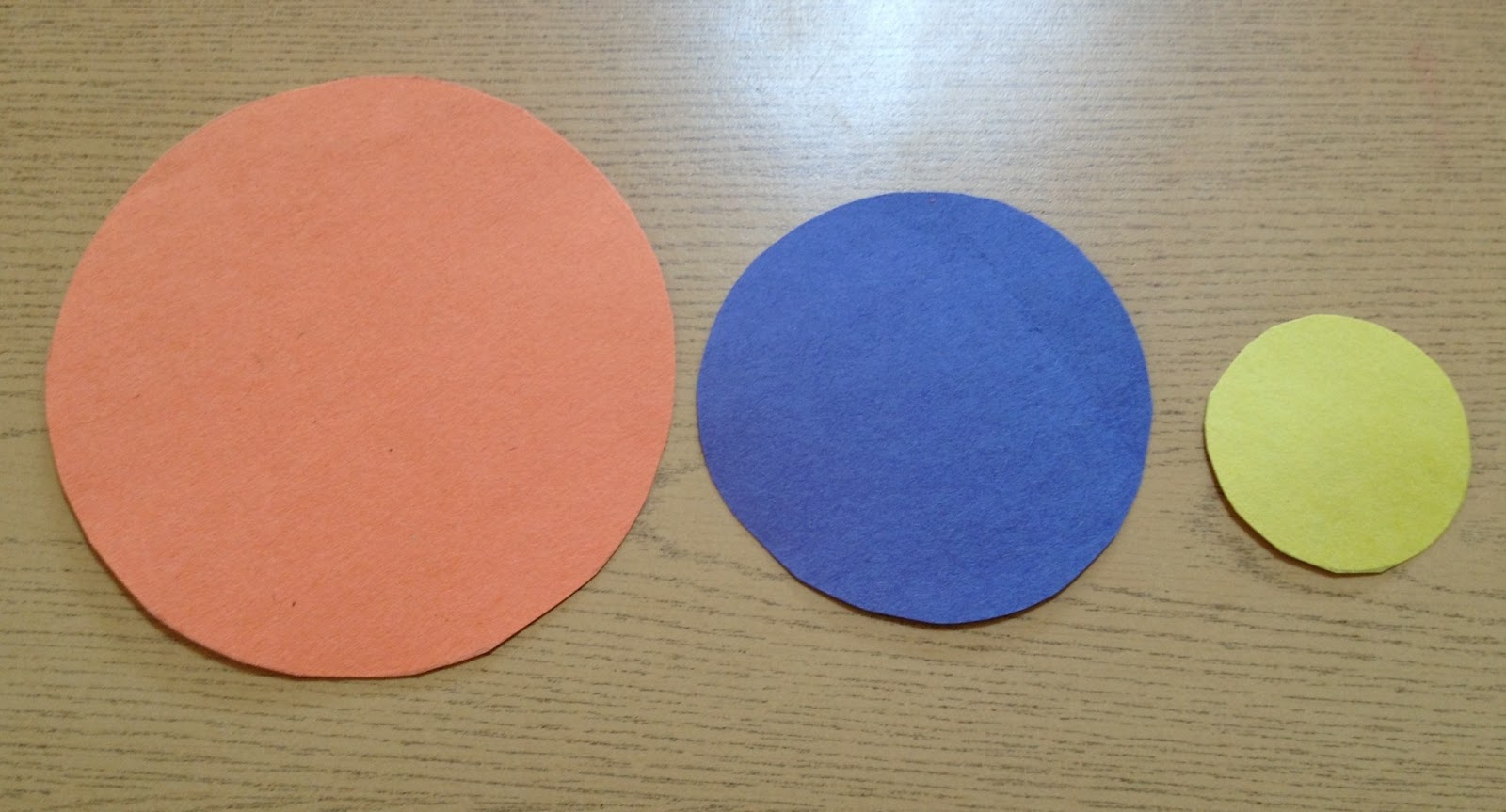
·         3 different sized circles to trace
·         Scissors
·         Glue
·         Plastic Straw
·         Scotch Tape
·         Ribbon

Directions:

1. Trace 3 different sizes of circles (small, medium and large)on 3 different pieces of construction paper. Cut out with scissors.


2. Glue all three circles on top of each other, with the smallest circles on top and largest circle on the bottom.


3. Using scissors cut small triangles out of the largest circle.


4. Cut a small piece of a plastic straw.

5. Tape the straw to the back of the flower.


6. Repeat steps 1-5 and string the flowers together with ribbon.


7. Hang up and decorate! 

Monday, June 17, 2013

Friends of Kevin Radio Interview

Earlier today I had a great conversation about preschool education with Kevin Willett from the Friends of Kevin radio show.

During today's conversation, we talked about a range of topics from EMH's history, common questions about the Montessori Method and preschool education, and our program in general. 

Please visit us again for a link to the interview. 

Saturday, June 15, 2013

The Preschool Graduation Ceremony

Today was EMH's 19th graduation ceremony! It was a fun event, celebrating the achievements of each child in our program, followed by a potluck lunch filled with lots of delicious food. 

You may be wondering, what is a preschool graduation ceremony? And, why even have one for children who are so young? These are some common questions that we hope to answer for you.

The graduation ceremony 


Each school is different and preschool graduation ceremonies vary greatly between schools. Some preschools order graduation caps and gowns, while other schools, like EMH, are less formal and children wear their normal attire. Almost all schools, follow a similar formula: the graduation begins with a short student performance, then the children are awarded ribbons and certificates, and after families are invited for lunch.

At EMH, the graduation program changes every year, depending on the ages and interests of the children enrolled. Some years, the children sing and dance to songs they enjoy and have special meaning to them. One year, the children dramatically acted one of their favorite songs. This year, each child preformed a song on the piano.

We hold our graduation ceremony on Saturday mornings, to make it more convenient for families attend. Normally, the graduation ceremonies are short, and the length of the potluck lunch depends our families. This year, although our class was small, the families who participated were great. We had a delicious lunch with even better conversation and the children had a great time eating and playing.

Why we have graduation ceremonies


Our students eagerly await graduation day. Some students, if they begin at age two and continue through to Kindergarten, graduate from preschool multiple times. However, each year they are excited for the ceremony: the children are proud of themselves and their work and look forward to receiving recognition for all they have achieved.

When many people think back to their preschool years, all they might remember are fun and games. This is exactly what we want people to remember: that the process of learning is fun. However, because of the increased use of standardized testing at an early age, preschool programs, even play based programs, are more focused on academics. On top of teaching children the basics, many schools also now teach children how to complete school work; some preschools even assign homework.

Personally, as a teacher, I see how much children grow and develop during the preschool years socially, emotionally, cognitively, linguistically and physically. Having a graduation ceremony teaches them to recognize their achievements and to be proud of all they have accomplished. At this morning's ceremony, I saw how proud the children were that they had learned how to play the piano. Playing for their parents was a big accomplishment for them.

For children moving on to kindergarten or first grade, the preschool graduation ceremony can be an important milestone. Many children will soon begin riding a yellow bus to school when they start "big kid" school. These children are always excited a proud to be moving on to the next stage in their academic careers.


At EMH, the graduation ceremony is a fun and laid back event that means a lot to our students. We always have a lot of food and a great time with our parents. Although the children may be too young to grasp what a graduation ceremony really means, they do deserve recognition for the achievements and are proud of what they have accomplished.